
South Korea blew up Black Tuesday
GOLDMAN SACHS CLAIMS THAT AI NARRATIVES REMAIN UNCHANGED, BUT THAT INTEREST-RATE ESCALATION EXPECTATIONS, BUYBACK SILENT PERIODS AND VALUATION PRESSURES INCREASE RISK IN THE MEDIUM TERM。
Original title: "Black Tuesday, South Korea blew up, and the world's chip-stocked bull market was "drinked with a stick," just "technically adjusted."
Source: Wall Street
IT WAS NOT AN ACCIDENT BY SOUTH KOREA’S “SMALL ESSAYS” BEHIND THE CRASH OF THE CHIP, BUT IT WAS INEVITABLE THAT THE AI PLATE WAS OVERCROWDED AND VULNERABLE. ACCORDING TO SOME ANALYSTS LIKE GOLDMAN SACHS, THE NARRATIVE OF AI HAS NOT CHANGED, AND THE FALL IS CONCENTRATED IN CROWDED AREAS, MORE LIKE A "TECHNICAL BACKLASH". BUT THE INCREASE IS EXPECTED TO HEAT UP, 65% OF THE COMPANY IS IN A BUYBACK PERIOD, MULTIPLE PRESSURES HAVE ACCUMULATED, AND THERE IS NO CLEAR BOUNDARY BETWEEN RECALL AND MEDIUM-TERM RISK。
on tuesday, june 23rd, the global chip unit was caught by the koreans. a wall street strategist called the crash "chip-wreck."。
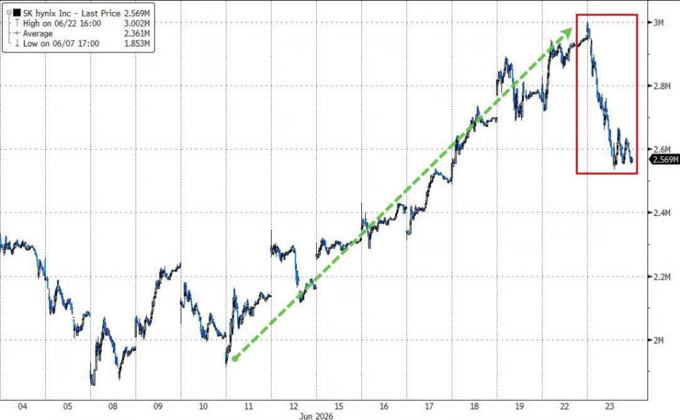
THIS YEAR, THE WORLD'S BIGGEST STOCK MARKET — KOREA — WAS THE FIRST TO CRASH. KOREA'S KOSPI INDEX DROPPED BY 10 PER CENT A DAY WITH MULTIPLE TRIGGERS OF MELTING, AND SK HERCULES AND SAMSUNG ELECTRONS FELL BY 10 PER CENT EACH。
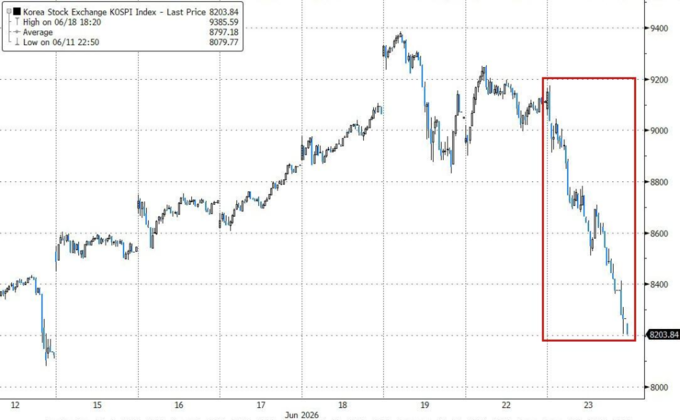
The storm was triggered by a few minor essays: media reports that Young Weida Rubin is expected to lose production, that SK Hercules is slowing down the production of stored chips (HBM4) and moving to cheaper ordinary DRAM; and reports from Korea's Associated Press that Korean multiparty parliamentarians are discussing taxing unrealized gains on assets such as stocks, real estate, etc. — i.e., books are not sold and taxes are due。
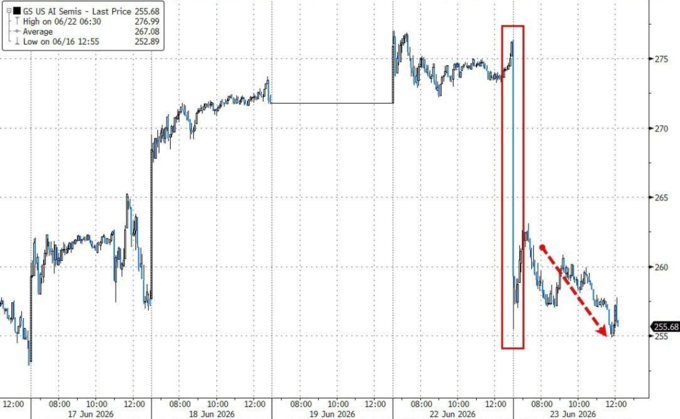
The "chip earthquake" was immediately transmitted to the US stock。
THE OVERNIGHT SEMICONDUCTOR INDEX IN PHILADELPHIA (SOX) FELL BY 7.9 PER CENT A DAY, AND ONLY THE ENTIRE COMPOSITION LINE FELL, NONE OF WHICH WAS SPARED. LIGHT TECHNOLOGY FELL BY 13 PERCENT -- AND BY TUESDAY IT HAD RISEN BY OVER 300 PERCENT THIS YEAR, THE STRONGEST INGREDIENT IN THE PHILADELPHIA SEMICONDUCTOR INDEX YEAR. MI-RAY, YOUNG-WIDA AND AMD ALL TOGETHER CONTRIBUTED TO THE DROP OF 500 OR 50% OF THE STANDARD. IT'S A DROP OF 3.3 PER CENT AND A DROP OF 0.1 PER CENT AND A DROP OF 1.4 PER CENT。
BTIG LLC Chief Market Technology Analyst Jonathan Krinsky says:"Whether or not there is a rebound in the short term, we still believe that there is a medium-term downside risk to the technology/artificial intelligence plate. He thinks that the semiconductor plate has a 10% to 15% drop spaceIn the past few days, the government has been able to provide information about the situation on Tuesday, which is described as "Chip-Wreck."。
However, Peter Callahan, a Goldman Sachs Global Banking & Markets TNT panel expert, wrote in a quick review on June 24: “Most of today’s exchanges with investors revolve around what you see on your side, rather than the signs of a broader narrative shift. This is the key. It set a boundary for this round to be sold:THE PROFILE WAS DIFFICULT TO SEE, BUT AT LEAST ON THE SAME DAY NO FUNDS WERE SEEN TO ABANDON AI TRANSACTIONS ALTOGETHER。
SO THE PROBLEM IS NOT AS SIMPLE AS "A SMALL PIECE OF SOUTH KOREA SMASHING THE WORLD'S AI BULL CITY." IT'S MORE LIKE A BOARD THAT'S ALREADY SWOLLEN, CONGESTED AND LEVERAGED, WITH A COLLECTIVE RISK OF EXPOSURE TO A FUSE. IN SHORT, THERE IS A "TECHNICAL ADJUSTMENT" FEATURE; IN THE MEDIUM TERM, THE VULNERABILITY OF AI TRANSACTIONS HAS NOT DISAPPEARED。
It was a mission, not an accident
The collapse of Korea seemed sudden, but the logic behind it was not complicated。
SK HERCULES HBM4 SLOWED DOWN THE NEWS OF A SLOWDOWN IN PRODUCTION, AND THE STOCK WEIGHT IN THE SOUTH KOREAN STOCK MARKET WAS SIMILAR TO THE APPLE'S NAYS — TOO BIG TO HOLD THE WHOLE INDEX IF SOMETHING HAPPENED。MORE CRITICALLY, THE KOREAN DIASPORA IS HEAVILY USING LEVERAGE ETFS FOR AI/SEMICONDUCTOR TRADING, WHICH CAN BE SOLD PASSIVELY TO MAINTAIN LEVERAGE RATIOS AND RESULT IN MECHANICAL SALES。
The message itself is a fuse and the lever structure is the explosive. At the same time, there are market observers who ask, "Can South Korea's leverage-scrambling be the end of America's technology cow market?"
THE PROBLEM IS CERTAINLY EXAGGERATED, BUT IT POINTS TO A REAL VULNERABILITY: THE HIGH CONCENTRATION OF AI/SEMICONDUCTOR TRANSACTIONS, THE HIGH LEVEL OF SILO STRUCTURE OF GLOBAL INVESTORS, AND THE POSSIBILITY OF ANY NODE BEING SOLD ALONG THIS CHAIN。
ACCORDING TO GOLDMAN SACHS' POST FACTO DATA, BOTH SIDES WERE SELLING: LONG-LINE FUNDS (LOS) SOLD UP TO -18 PER CENT, AND HEDGE FUNDS (HFS) ALSO CONTINUED TO SELL AROUND THE CLOCK, ACCOUNTING FOR 60 PER CENT OF SALES (THE RECENT AVERAGE WAS ABOUT 50 PER CENT). BOTH TYPES OF INSTITUTIONS SELL OVER $1 BILLION IN NOMINAL EXPOSURES。
The worst drop in the U.S. stock is the "crowded" stock, the "most profitable" stock: 10 PER CENT DOWN IN THE GOLDMAN SACHS STORAGE BASKET, 620 DOWN IN THE AI SEMICONDUCTOR BASKET, 440 DOWN IN THE AI STOCK BASKET, AND 420 DOWN IN THE LAST 12 MONTHS IN THE GSXHUHMOM。
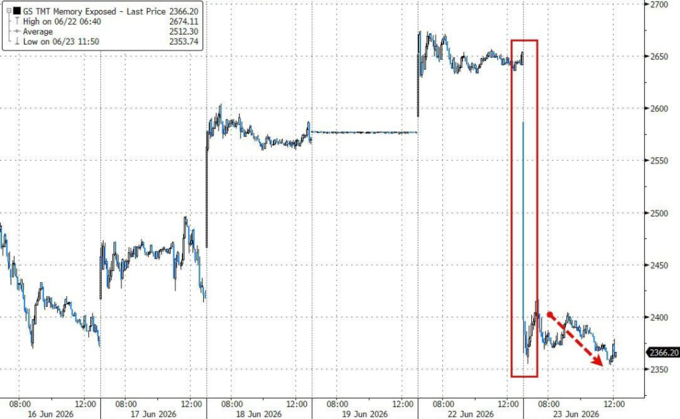
Technical adjustments? Goldman Sachs: The narrative hasn't changed
WHAT DO YOU THINK OF THE MARKET? IF YOU LOOK AT THE DROP, TUESDAY IS LIKE THE AI DEAL IS RE-PRICING. HOWEVER, IN TERMS OF TRANSACTIONAL AND FINANCIAL FEEDBACK, THE CONCLUSIONS WERE LESS ABSOLUTE。
Peter Callahan, an expert at Goldman Sachs TMT trading counter, wrote in the Post-Exercise Express that the feeling of the day was described by one word as "ordered" — although the drop was not small, the total value of the exchange was almost the same as the 20-day average, and the cash and volatility counter was functioning normally。
More importantly, he described the dialogue with investors that day:"Most of today's exchanges with investors revolve around the theme `How are things on your side', and there are no signs of a broader paradigm shift, nor are there any additional questions about `new' or `backward'."
In other words, no one is changing their warehouses, no one is looking for new directions for investment. People are just asking each other for information。
Another market strategist in Goldman Sachs, Chris Husey, gave a concrete support: today's drop was over 8%, 12% of the technology units, except for one, and the full double-digit increase in the remaining years, most of which have more than doubled this year. His judgment is:
"TODAY'S SALE IS MORE LIKE A "FLOP THE BUBBLE" OF A FEVERISH RISE IN STOCK PRICES THAN A RE-EVALUATION OF THE BASIC ASPECTS OF AI INFRASTRUCTURE TRANSACTIONS。Instead of a full-scale sales index, investors are revisiting: How much should they pay for stocks that have doubled in six months?"
On the other hand, there is a similar trend in the judgement of Natixis Advisors, fund manager, Jack Janasiewicz:
"looks like it's more a technical sale than anything else. the size of the market is good after the opening, although there are a lot of big red numbers — this is a narrow drop. at the same time, he reminded me, "when we see the beta and the momentum so crowded, it can easily lead to an ugly deleveraging."
The other side of "technical adjustment": structural concerns that cannot be ignored
The term "technical adjustment" sounds comforting, but it explains everything and may mask real risks。THERE ARE INDEED TECHNICAL FEATURES OF THE DAY: THE DROP WAS CONCENTRATED IN THE WINNER'S SHARES, THE DEAL WAS NOT COMPLETELY OUT OF CONTROL, AND THE INVESTOR EXCHANGE DID NOT SHOW THAT THE AI NARRATIVE WAS TURNED OVER IMMEDIATELY. HOWEVER, THERE IS NO CLEAR FENCE BETWEEN TECHNICAL ADJUSTMENTS AND STRUCTURAL RISKS — THE FORMER MAY WELL EVOLVE INTO THE LATTER IF THEY ARE SUFFICIENTLY INTENSE。
There are several background figures that deserve to be read together。
First, it's too fast。It's been over 30% since the end of March. In June alone, Philadelphia's semiconductor index was 8 trading days (16 trading days) with a single wavelength of more than > 5%. In other words, on half the trading day in June, the chip shares were shaking. Even after the fall on Tuesday, the Philly semiconductor index rose by about 5 per cent this month, running a winning pointer and generalizing around 8 percentage points. There are reasons for technical corrections as well as high levels of vulnerability in this position。
Second, the hold-up was too crowded and the "Todi" force was temporarily absent。Evercore ISI chief equity and quantitative strategist Julian Emmanuel, interviewed on Bloomberg TV, said, "People are looking for a reason to hedge, but they want to hold on. This sentence precisely describes the current contradictory mindset of the market. Meanwhile, 65 per cent of the listed companies are currently in a silent buyback period. In the past, the company's buyback was an important "tote" force, but this card could not be played。
Third, the macro background is changing. The Fed's interest rate hike is expected to rise rapidly – US banks are expected to raise interest rates three more times a year, and the market's probability of pricing the July hike has risen from close to zero to about 50 per cent。The valuation logic of the high-growth technology unit is based on low interest rate discounts, which, once high, naturally contract the present value of the long-term gains, bearing the brunt of those equities that are expected to raise high valuations。
According to Michael O'Rourke, the chief market strategist of Jones Trading, the agency's service, "Super Large Cloud Calculator is a new software unit. And this plate is dragging down the Seven, but it will not go astray."
Apollo Chief Economist Torsten Slok lists the three core issues facing the market today: what happens if an AI firm starts cutting its budget because of the lack of ROI? If the Fed increases interest rates in September and December, what are the implications of the stock and credit marketsThere are no simple answers to these questions, but markets are moving from `willing to ignore these risks' to taking them seriously。
The technical adjustment was worth taking seriously not because of the drop itself, but because it occurred when valuation, warehousing, interest rates and emotions were at extremes。
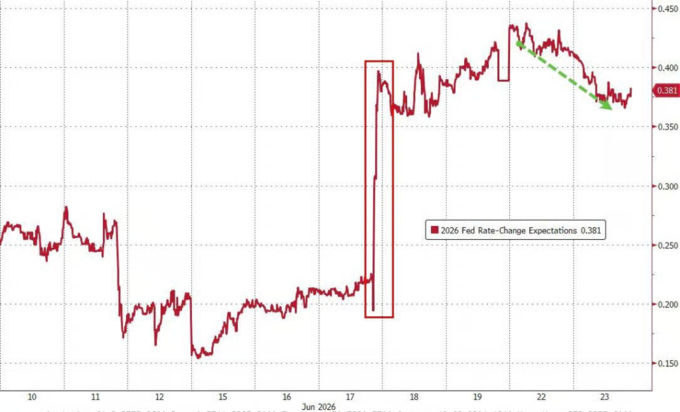
In history, the Korean crashes are short-lived - and the next stress test is beautiful light
Historical data show that the collapse of the Korean stock market is often sharp but brief. This is a silver edge that many would like to quote。
BUT THE BACKGROUND IS DIFFERENT FROM WHAT HAPPENED IN KOREA: IT TOUCHES THE CORE NERVE OF THE GLOBAL AI TRANSACTION -- IS THE DEMAND FOR THE STORAGE CHIP REALLY AS STRONG AS EXPECTED? DID THE PASSION FOR DATA CENTRE CONSTRUCTION OVERWHELM THE FUTURE
These questions will be partially answered after the release of the United States Press Wednesday. Mi Gwang is the strongest component of the Philadelphia semiconductor index this year, increasing by over 300% by Tuesday, and Wednesday's financial report will be a real stress test。
Krinsky of BTIG said perhaps the most direct:"The mid-term downside risk of the semiconductor is still present, whether or not it is a short-term rebound."
Original Link
