
Do model giants eat everything? Agent could have grown more independent
The value of Age Age is not always in the hands of model companies
TL;DR
• The "Fat Models" narrative suggests that the model company could integrate the API, tools, Agent framework and application portal upwards。
• However, intelligent bodies cannot be seen as merely talking boxes upgraded to perform tasks across data, tools, identities, payments and enterprise systems。
• Model giants still have the advantage of calculus, capital, models and distribution, but the organization, memory, route, identity and so on may leave room for start-ups。
In the AI Age, will model companies like OpenAi, Anthropic, Google continue to eat API, tools, smart framework, business applications and consumption portals, as the market expects
This is the core of the Fat Models narrative: if the closed frontier model continues to advance rapidly and integrates upwards through distribution and tool chains, most of the value of the AI industry may flow to the model level. But the other judgment is that when AI moves from chatting to the age of smarts, value does not necessarily just sink into the hands of model companies, but may spread to many new infrastructure layers。
"Fat Models"
THE ROUTE OF A LARGE MODEL COMPANY IS NOT DIFFICULT TO UNDERSTAND: FIRST, TO HAVE STATE-OF-THE-ART BASIC MODELS, THEN TO PACKAGE COMPETENCIES INTO API, TO DEVELOP TOOLS AND SMART BODY FRAMEWORKS, AND FINALLY TO ENTER CONSUMER APPLICATIONS AND BUSINESS WORKFLOWS. AS LONG AS THE MODEL IS STRONG ENOUGH, THE TOP LEVEL OF EXPERIENCE, DATA AND DEVELOPERS ' ECOLOGY MAY CONVERGE TOWARDS THE MODEL PLATFORM。
This is also an important reason why capital is willing to give a high value to the head AI. Reuters in May reported that the post-investment valuation of Anthropic reached $965 billion after completing the $65 billion Series H facility. OpenAI disclosed the latest financing in March this year, with a post-investment valuation of $85.2 billion. The market value of Alphabet has also exceeded $4 trillion, more than tripled since the end of 2022. The market is using a very high value to bet on the future entry capacity and profit space of the model layer。
However, the question remains as to whether the advantages of the model are sufficient to give these companies each layer of value at the same time. Front-line models, algorithms, research teams, cloud infrastructure and corporate customer resources are indeed concentrated in the hands of a few companies; but once intelligent bodies enter the real stream of work, the value chain no longer revolves around " which model is strongest"。
Similar changes have occurred in several technology cycles. IBM used to make large machines into integrated systems of hardware, software, services, and then PC ecology splits them; Microsoft controlled desktops, and Web opened new applications; operators owned vertical integrated networks and the Internet dismantled network services; and AWS developed over a trillion-dollar cloud platform, but there are still a large number of independent software companies on the clouds。
These analogies are not meant to indicate that "a large platform will lose" but that a technology cycle, after infrastructure is completed, tends to spill value from a single integrated platform to a more professional layer。
Smart body is not a chat box, but a cross-system mission
The key change in Agent's ecology is that AI is not just answering questions, but starting to take on the task. Multiple layers of models, organization, memory, execution, identity, payment, etc. may form independent values around intellectual stacks. Different firms will combine and compete at their respective levels, rather than being entirely dependent on the same model platform。
The first change that underpins this judgement is the growing supply of models. Frontline models continue to lead, but open source weight models, edge models and business models also continue to emerge. Different models vary in capacity, delay and cost. For many commercial workloads, firms and developers combine costs, speed, stability and mission quality, rather than defaulting on all requests to the most expensive and powerful model。
THE SECOND CHANGE IS THAT THE AI APPLICATION IS TOO DISPERSED. A MODEL COMPANY CAN MAKE GENERIC CHAT APPLICATIONS AND CAN ENTER LARGE ENTRANCES, SUCH AS OFFICE, CODE, SEARCH, ETC., BUT EACH INDUSTRY HAS ITS OWN DATA STRUCTURE, COMPLIANCE REQUIREMENTS, OPERATING HABITS AND SYSTEMS INTERFACES FOR REAL ACCESS TO SPECIFIC PROCESSES SUCH AS MEDICAL, FINANCIAL, MANUFACTURING, LEGAL, PASSENGER SERVICE, PROCUREMENT, LOGISTICS, ETC. IT IS DIFFICULT FOR A SINGLE COMPANY TO MAKE THE MOST SUITABLE PRODUCTS IN ALL SCENARIOS。
The production environment of enterprises also reinforces this fragmentation. At the experimental stage, enterprises can accept a model demonstration or closed chat tool. Once in a critical process, clients will require data presence, authority management, audit records, cost control, vendor substitution and compliance certificates. At this point, enterprises prefer to assemble suitable components rather than be forced to accept the default option of a single platform。
This is also the key difference between intelligent and traditional chat applications. A medical intelligence may need to read medical records, examine drug interactions, call the hospital system, generate recommendations and keep audit records. An enterprise may need access to inventory, contracts, approval streams, vendor systems and payment networks for the procurement of smart bodies. They are more like "executors" moving between multiple services than a question and answer tool running in a single window。
Organization, memory, route and identity, possibly from model foreign minister
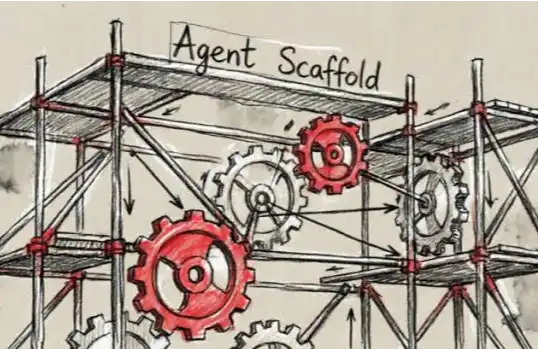
smart infrastructure can be broken down into multiple directions: organization, harness, memory, browser, route, model market, identity and payment. more frankly, these layers correspond: how to manage multiple intelligent bodies, how to connect models to practical tools, how to preserve and share context, how people interact with intelligent bodies, which models to request, how to prove the identity of smart bodies and how smarts complete payments。
THE HIERARCHY COULD BE THE CONTROL COUNTER OF THE AGE OF INTELLIGENCE. WHEN MULTIPLE INTELLIGENT BODIES OPERATE SIMULTANEOUSLY WITHIN AN ENTERPRISE, THEY NEED TO BE DEPLOYED, MONITORED, AUTHORIZED, COLLABORATED AND LIMITED IN RISK. IT IS DIFFICULT FOR A SINGLE MODEL API TO ADDRESS COMPLETE PROCESS MANAGEMENT ISSUES。
Harness can be understood as the model 'execution shell'. If the big model is brain, Harness is responsible for access to documents, databases, web pages, robots, business software and physical equipment. Different scenarios require different ways of connecting tools, which can lead to more specialized products。
Memory deals with context migration. The context cannot be locked in a chat window when more than one intelligent body has to understand the same user, business or job. Those who can provide transferable, authorized and auditable digital memory can become new infrastructure。
The value of route and model markets comes from multi-model deployments. If an enterprise uses multiple models at the same time, it will need to determine which type of mission is more appropriate and how to balance cost, delay and accuracy. Model competition thus becomes not only a top-up competition, but also a movement problem in the real production environment。
Identity and payment are more future-oriented, but it is the ability of smarts to actually execute transactions. As machine traffic and intelligence behaviour increase, the network needs to distinguish between who is initiating the request, whether it is authorized, and whether it can complete the payment. Existing human-oriented payment and identity systems may also need to be modified if they are to be involved in electronics, subscriptions, micropayments or enterprise procurement。
Model giants are still strong, but they don't necessarily eat the full value
THE BOUNDARIES OF THIS MODULAR NARRATIVE ARE ALSO CLEAR. IT'S NOT THAT BIG MODEL COMPANIES LOSE OWNERSHIP. THE FRONT-LINE MODEL IS STILL THE BASE OF THE AI EXPERIENCE, AND COMPUTING, DATA, RESEARCH TEAMS AND DISTRIBUTION CAPABILITIES REMAIN CONCENTRATED IN THE HANDS OF A FEW GIANTS. IF MODELLING CAPACITY CONTINUES TO RAPIDLY WIDEN THE GAP, THE UPPER ECOLOGY MAY STILL GATHER AROUND THE HEAD PLATFORM。
THE REAL DIFFERENCE IS THAT THE VALUE OF THE AGE OF SMARTS WILL NOT BE AS CONCENTRATED AS THE CHAT APPLICATION PHASE. WHEN AI ENTERS A REAL WORKFLOW, USERS ARE CONCERNED NOT ONLY WITH WHAT IS THE SMARTEST MODEL, BUT ALSO WITH ACCESS TO OLD SYSTEMS, THE ABILITY TO CHANGE SUPPLIERS, THE ABILITY TO CONTROL COSTS, THE ABILITY TO AUDIT AND THE ABILITY TO CROSS TOOLS TO DELIVER。
This leaves room for independent start-ups, but does not mean that every level will grow into a large company. The direction of organization, memory, identity, payments, browsers and routers ultimately requires proof that they have sufficient access, network effect or fee-paying capacity, otherwise they can easily become a function of a model platform。
Large model giants are integrating their capabilities upwards, and start-ups and investors are betting on intelligent organisms to break down more professional layers. The central unresolved question of the AI Age is: will the model become the super-platform that swallows the whole house, or will it become the starting point for a new round of modular infrastructure
